Level Designer and Gameplay Designer
Music Combined with Level Design
During the first ideation and prototyping phases I was mostly tasked with doing paper layouts for levels, and with figuring out the best way to communicate the position and layout of musical flowers to the composer of the game.
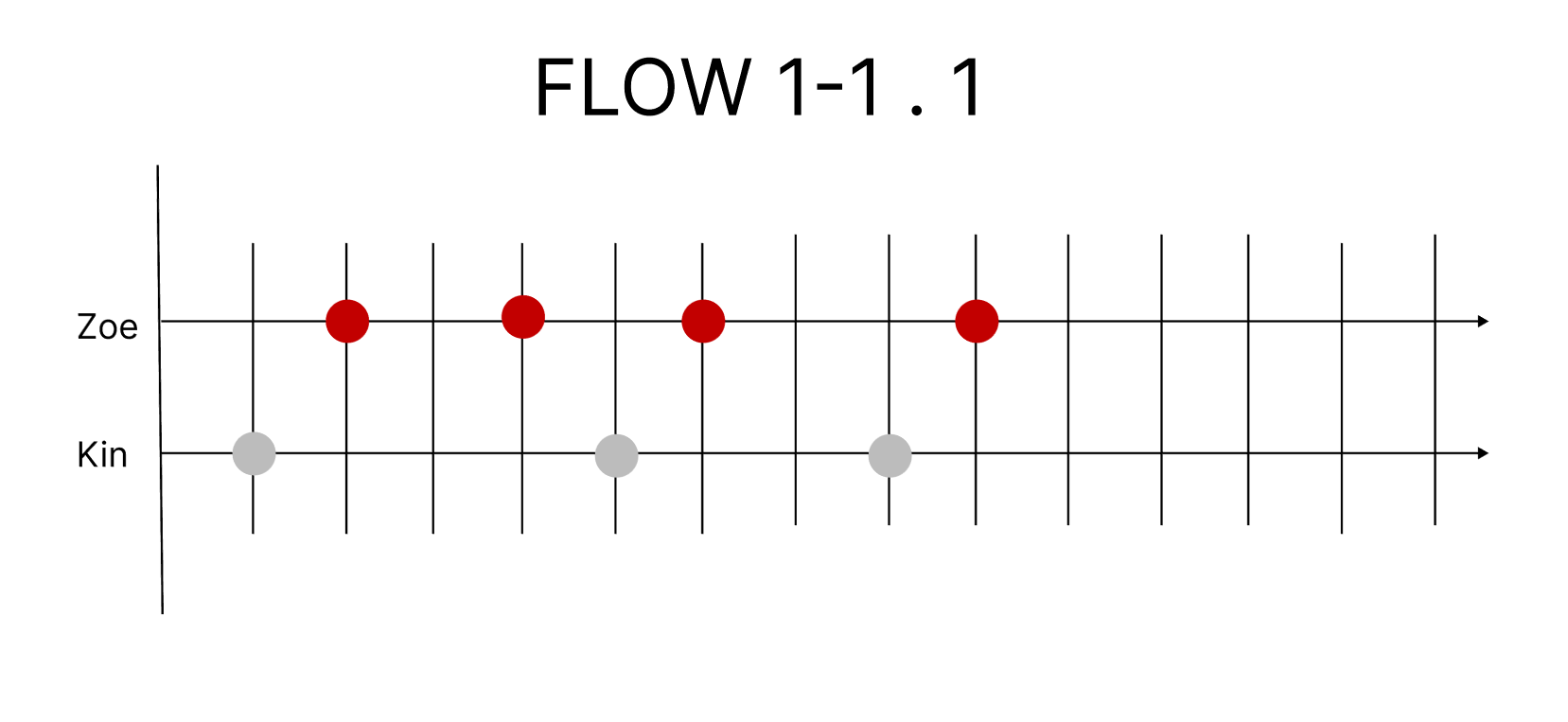
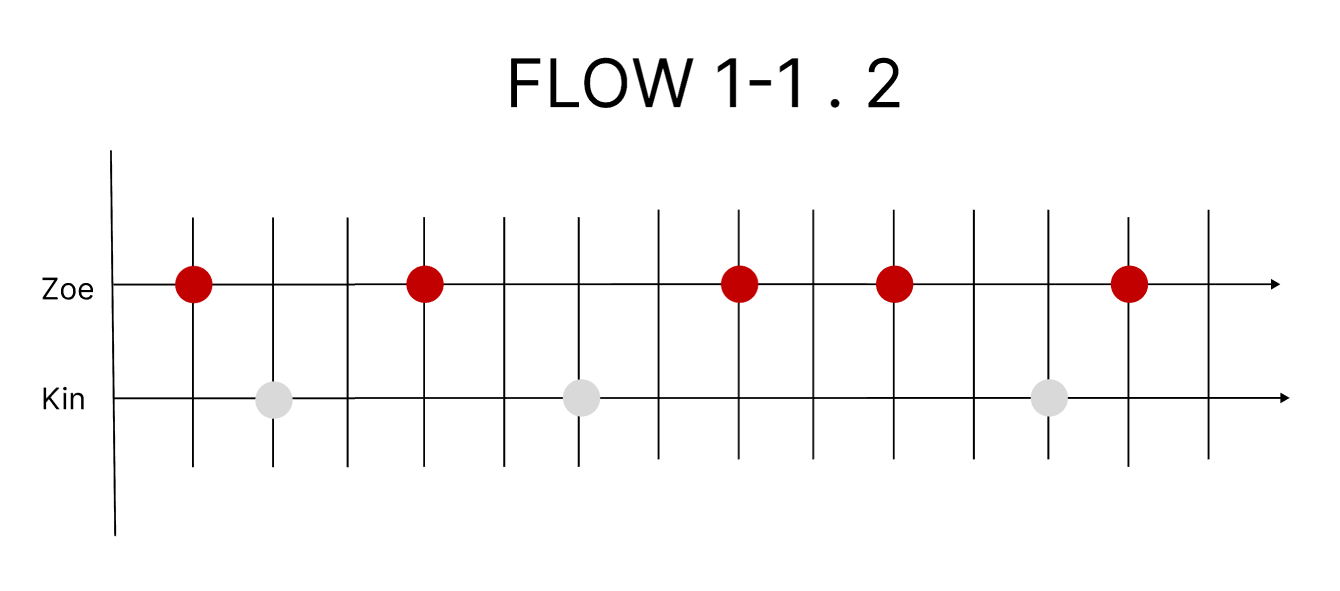
After some paper prototypes I quickly realized that the best way to show temporal and spatial relation of musical flowers was with a modification of a pentagram similar to what drummers use to write their music parts, accompanied by a map of the level layout. We named this puzzles "Music Flows".

Most of this early levels were inevitably scrapped so we could make better work. But we learned a couple of key elements. Zoe should rely more on the musical side of things, while Kin should be more focused on the platforming. Music Flow Charts were here to stay. However, most of these levels had too many notes, and very precise timing for both players. This ended up in the levels feeling tedious or too complicated for new players.
We took away those teachings into the creation of the first tutorial level and the rest of the levels, building up to the complexity of musical flows we wanted towards the end of the game. But also scaling down to fit our players skills and abilities. We did want to make a fun game after all.
.jpg)
.jpg)
.jpg)
%20(Medium).png)
Making the Tutorial level
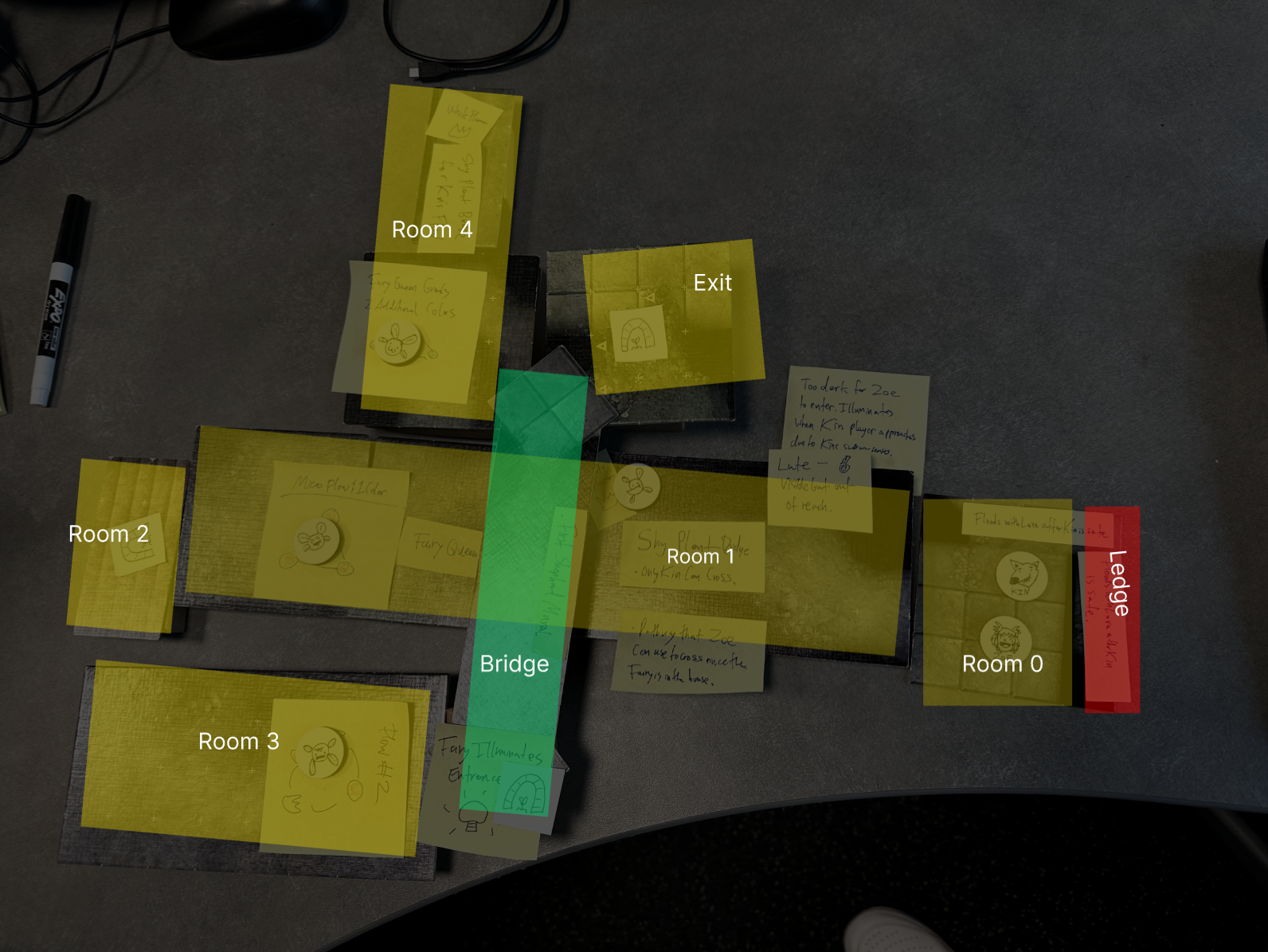
During in-person design meetings with the team, we came up with the first rough draft of the tutorial level using cardboard boxes with prints on them. Then with sticky notes we organized the narrative beats and Music Flow locations. Above you can the annotated picture of our prototype.
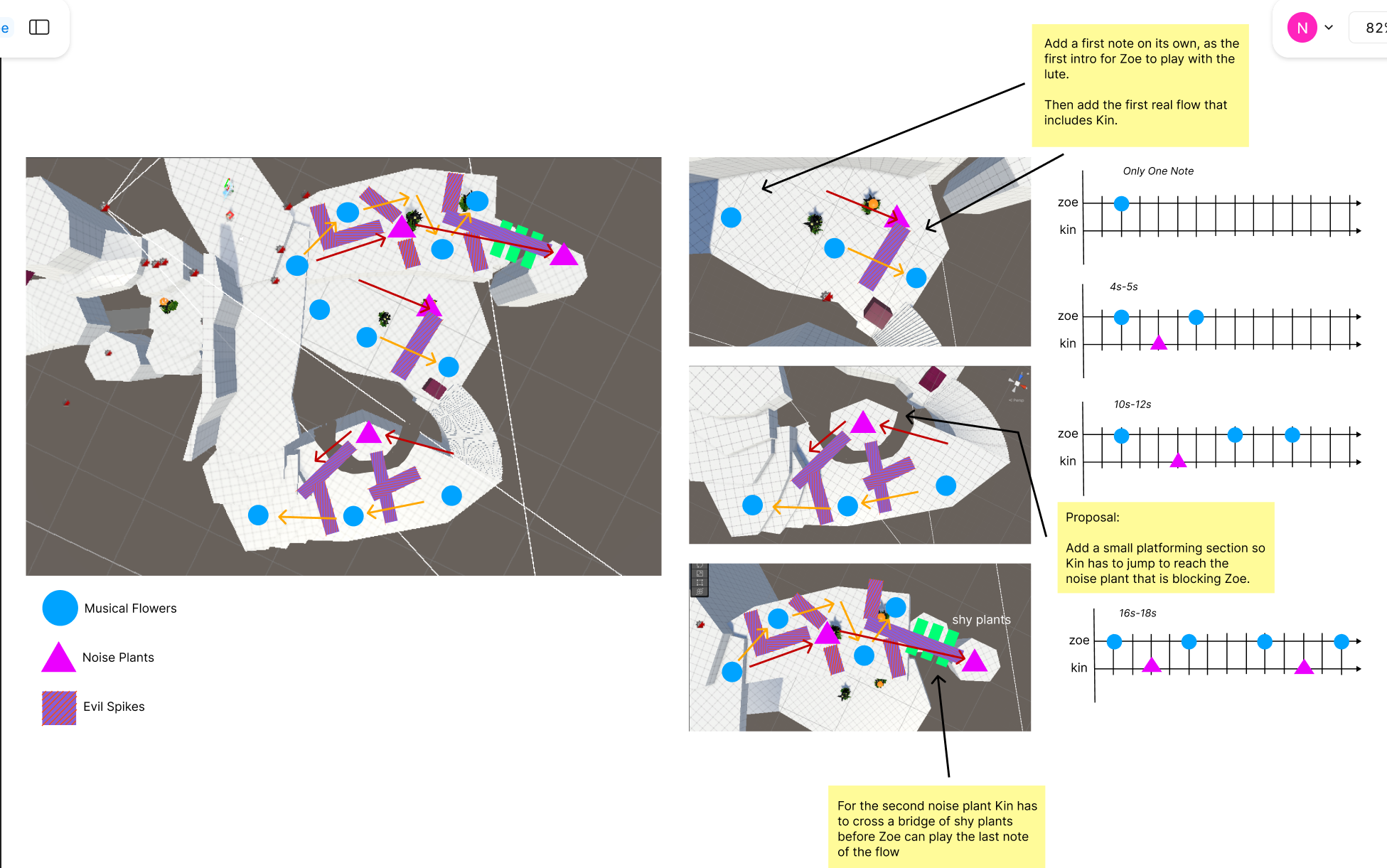
Moving into full production we moved all our physical designs into Figma, and everyone in the design team got assigned specific tasks. Mine was designing and laying out most of the Music Flows of the game. I started doing this in Figma over the level blockouts we had made in Unity.
Still taking part in the creation of the tutorial level I received feedback, based on playtests, from our producer, design director and composer on some placements of the notes, both on the level, and how they would best align in the Music Flow Charts.
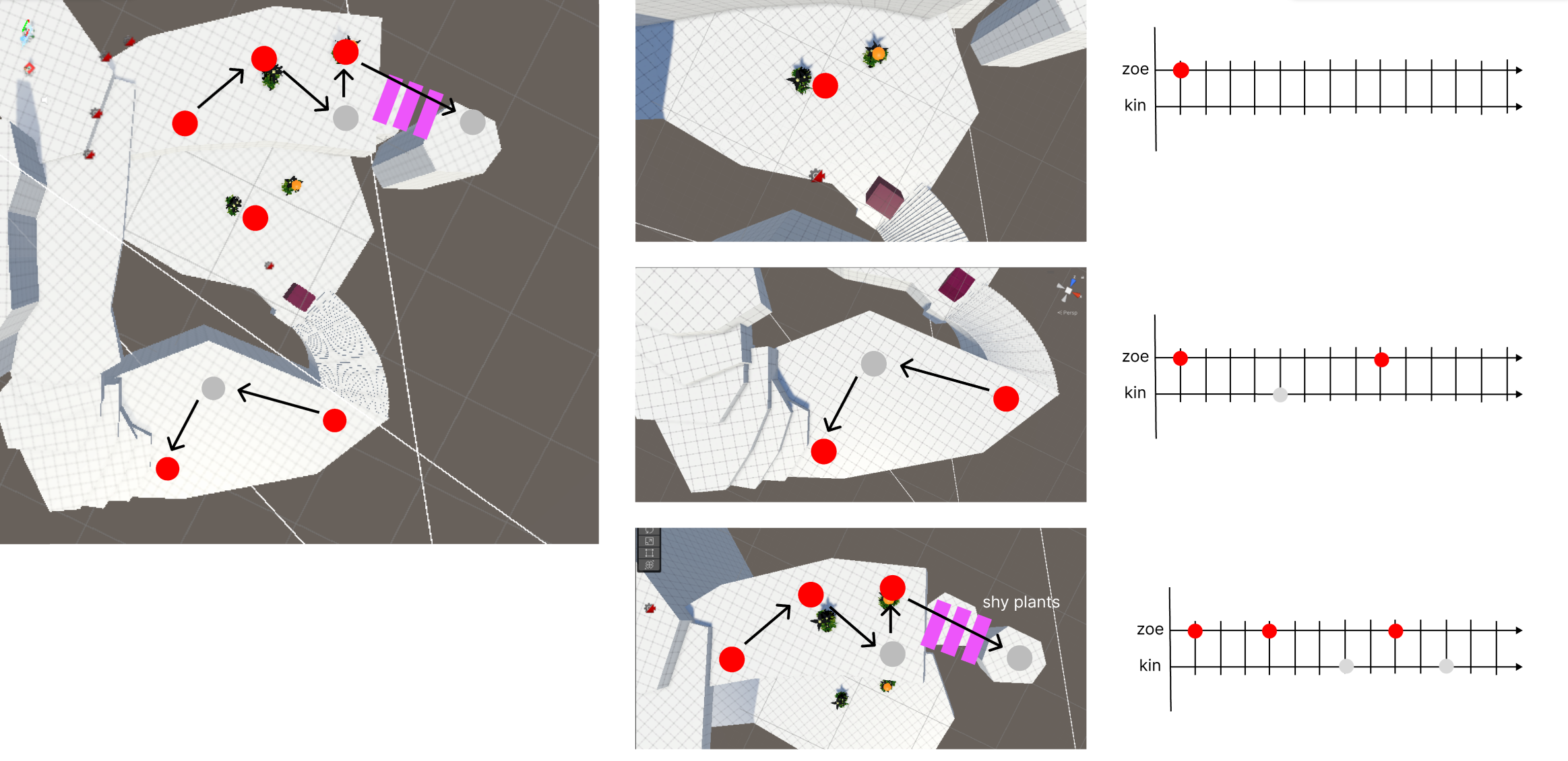
We decided that since this is a tutorial, we should very slowly and calmly explain to the players that they can play notes to interact with the musical flowers playing as Zoe. Then show that they can break certain "bad" flowers to remove thorny roots from Zoe's path, while playing as Kin. This simplified the puzzles of this level, but gave it a better feeling as a tutorial. Our players grasped the mechanic faster and more smoothly than before. As it can be seen on the following gameplay videos we had to reorganize all the musical flows to address feedback we got through multiple playtests.
Workflow for Music Flows
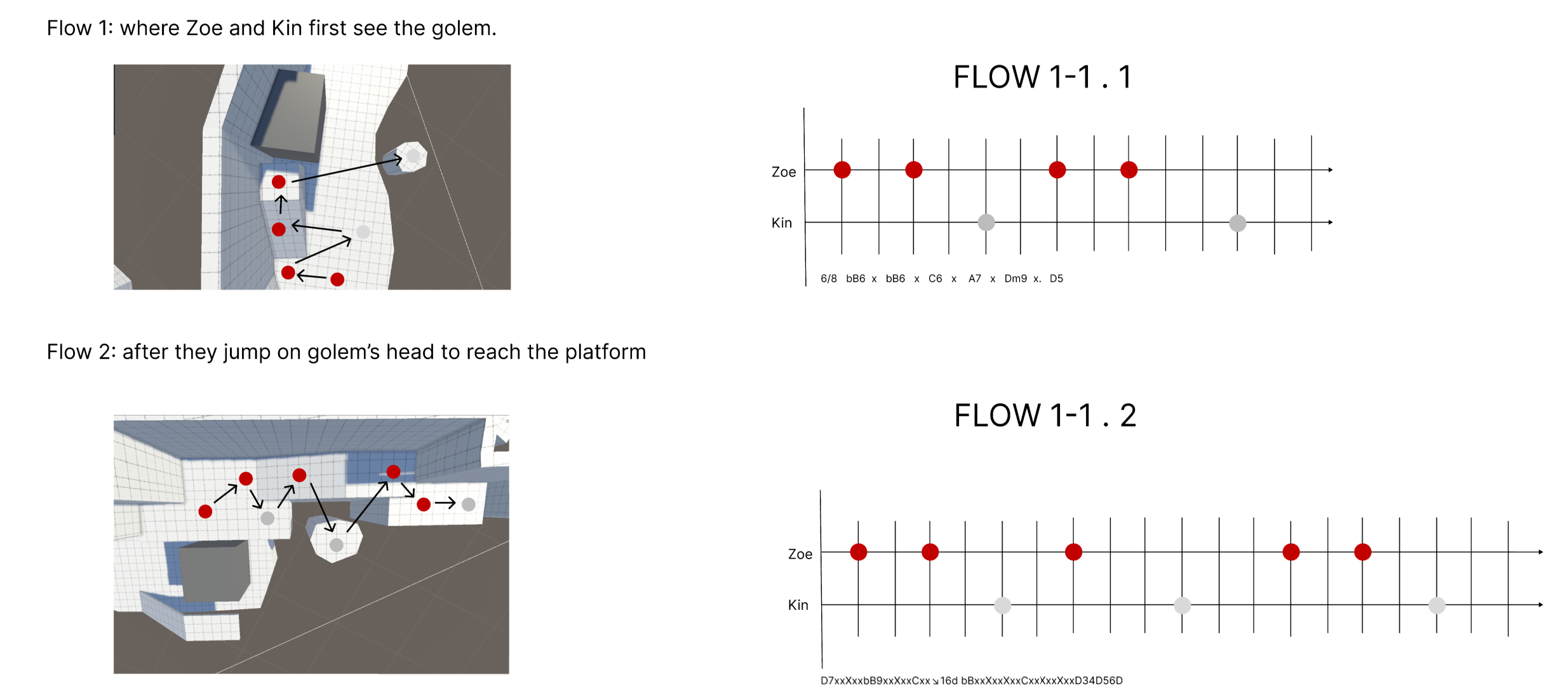
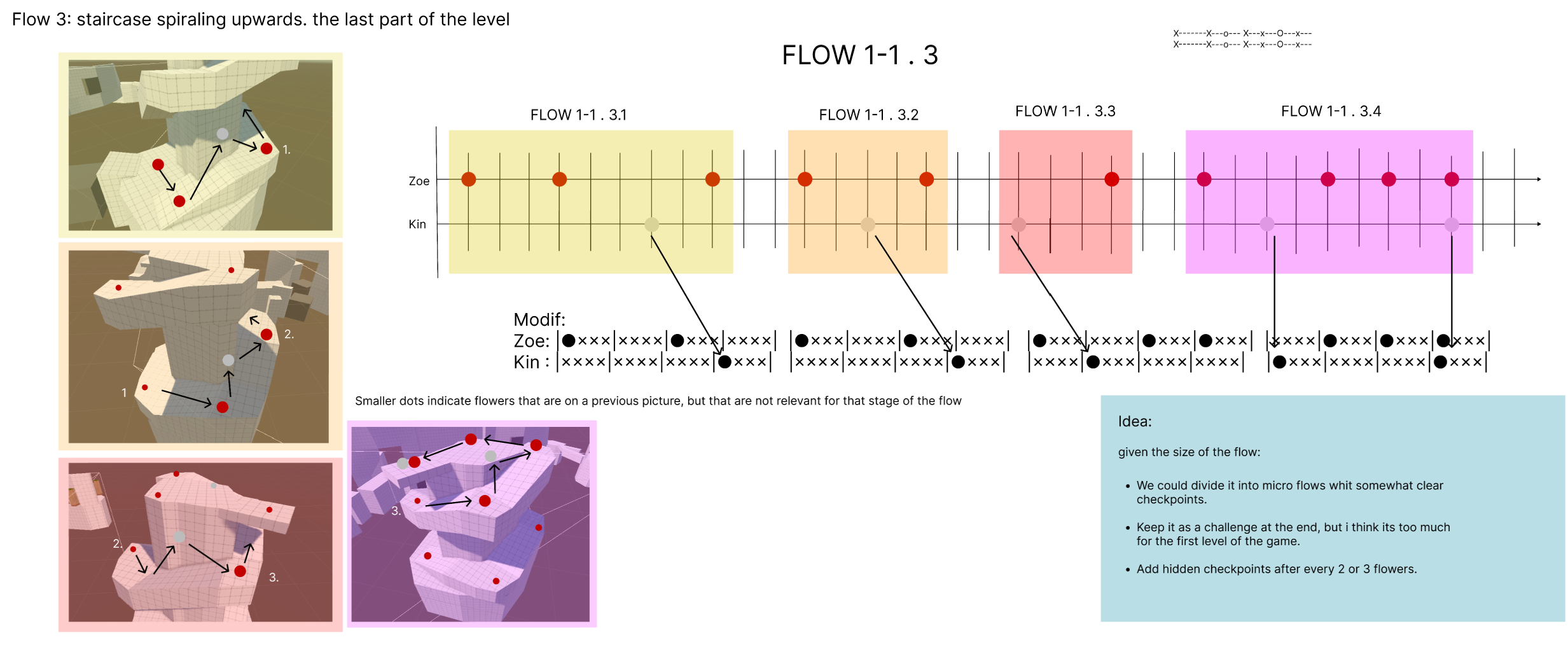
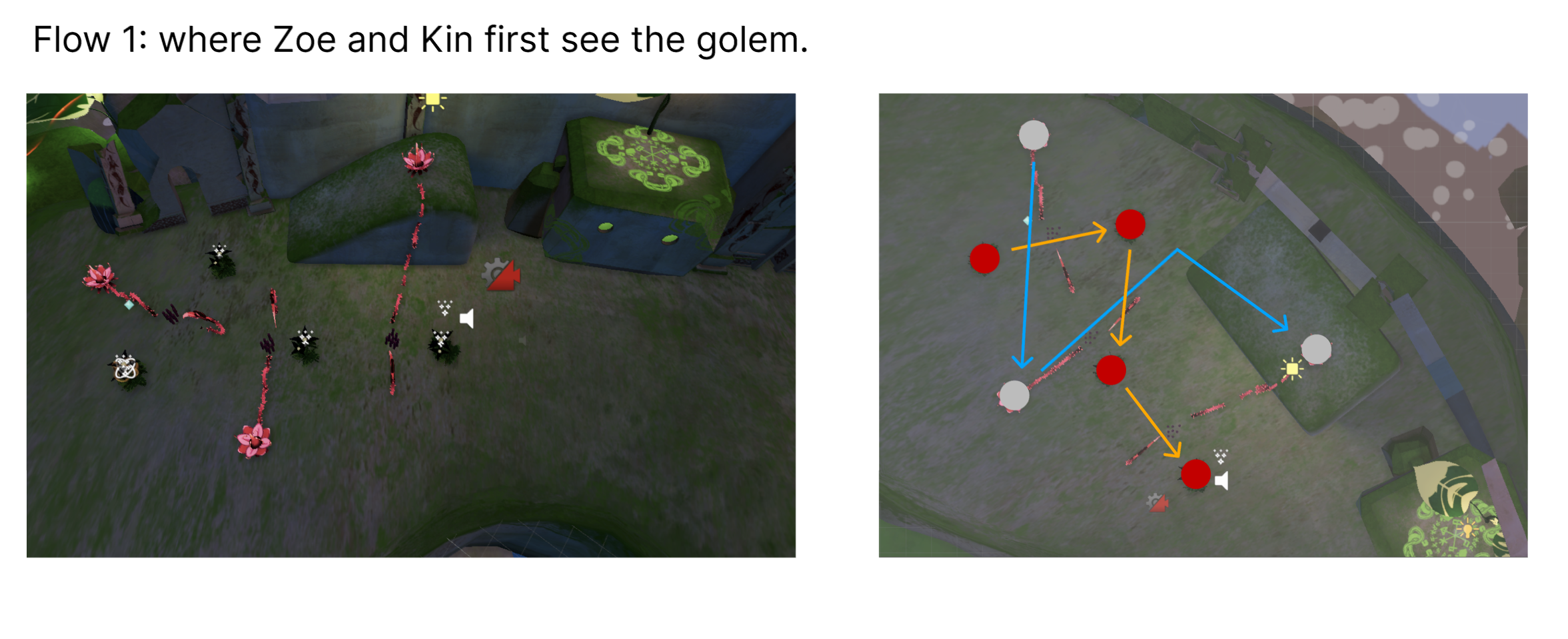
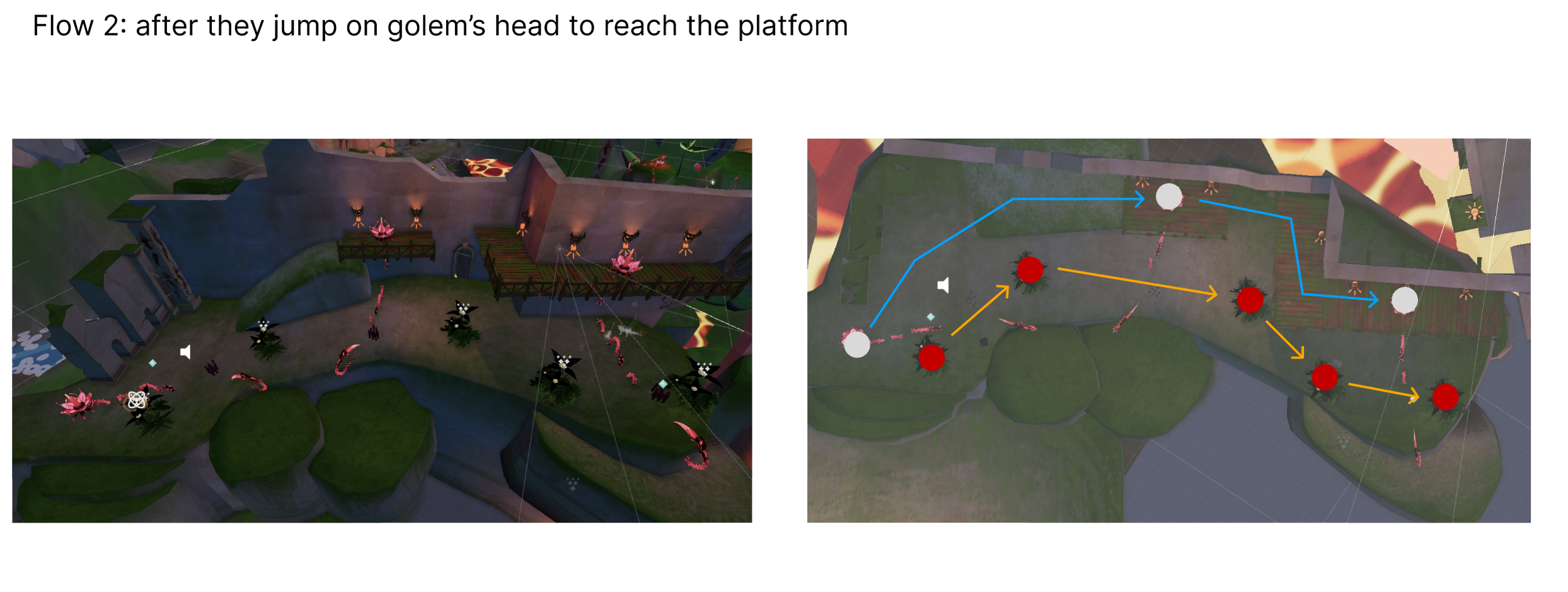
I would create a Music Flow Chart for every section of the level and add a top down view of the level blockout to showcase where the flowers should be placed, and their interactions with other puzzle or platforming elements.
With this I went on to design the rest of the Music Flows whenever a blockout was ready. This designs would all go through different iterations and tests to better arrange the music flowers to better fit the flow of the game and the music of the game. The following are charts and videos depicting the other musical flows I designed for the game.
PostMortem
I am very grateful that I was brought into this project from the early stages. Seeing the game evolve and become a very interesting and innovative thesis project makes me proud of my work and my team. However there are a lot of key things we learned along the way. We were to slow to start prototyping in engine, so most of our paper prototypes never made it past an Idea and we were never able to test them out.
We were also very late to set up the proper workflow of the Musical Flows from sketch, to Figma, to unity, to build. The process was a bit disjointed and sometimes I would do everything for a flow, sometimes other teammates had to step in and finalize the placement within the engine. This hindered out ability to have more working flows in the game.
Overall I'm glad that my unique position as a drummer, level designer, game designer and someone that worked with musical games before was able to contribute to the unique mechanic of this game. I will take all the lessons I learned here into my next projects and work.